
Buttonhole vs Regular Elastic: A
Manufacturer’s Perspective | Tekiş Lastik
Tekiş Lastik has been manufacturing narrow fabrics — including buttonhole vs regular elastic — since 1996. In
this guide, we share practical insights from our production experience to help B2B buyers make informed
sourcing decisions. OEKO-TEX Standard 100 certified (CertNo:2019OK0492).
Buttonhole Elastic
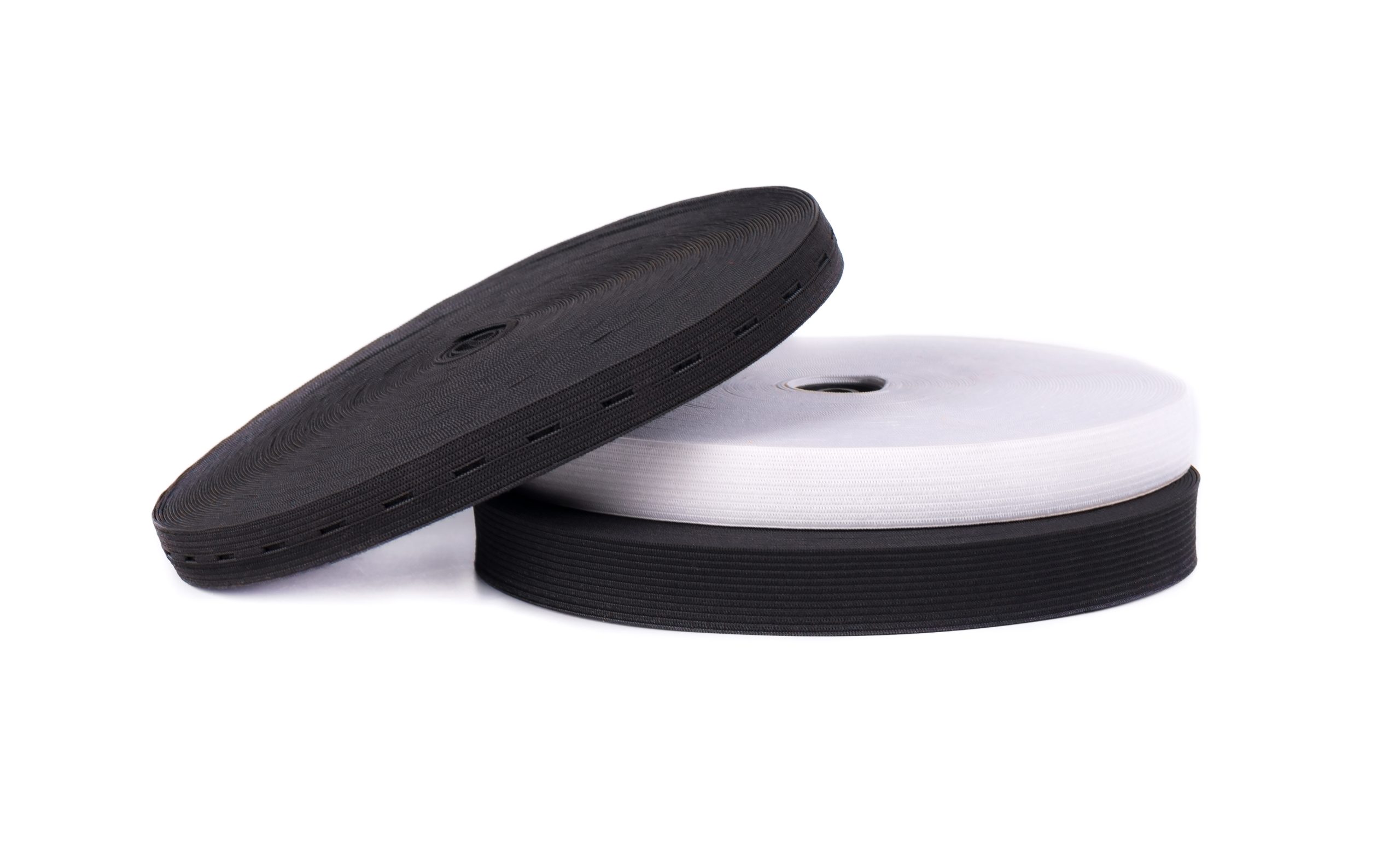
As the name suggests, buttonhole elastic is designed with pre-made holes along its length, typically used for inserting buttons or hooks. The elastic is knitted with quality polyester yarn and natural rubber latex, which gives it decent flexibility when stretched. Buttonhole elastic is often used in the back of waistbands, where gaps can occur and show off unintended skin or undergarments. It’s also ideal for belts for children and pregnant individuals, as it can accommodate for size changes.
Regular Elastic
On the other hand, the regular elastic is produced with durable, high-quality polyester yarn and natural rubber by weaving techniques. It’s known for quickly returning to its original length without deforming or losing shape, making it perfect for medium and heavy fabrics. Regular elastic is versatile and can be used in various sewing projects, such as waistbands, cuffs, sleeves, and face masks.
Differences and Usage
The most significant difference between buttonhole elastic and regular elastic is the pre-made holes along the length of buttonhole elastic, which allow for easier insertion of hooks or buttons. Regular elastic, on the other hand, must be sewn onto the fabric. Buttonhole elastic is an excellent option for garments that need to adjust the size easily, such as maternity wear. It’s also useful for clothing where the wearer might need to put the garment on and take it off quickly, like children’s clothes.
Regular elastic is perfect for more structured garments or items requiring a solid and secure elastic band, like fitted sheets or tablecloths. It’s also suitable for more complex sewing projects where you must sew the elastic into the fabric to create a specific design or shape.
In conclusion, buttonhole elastic and regular elastic are helpful in different sewing and crafting projects. It’s essential to consider the specific needs of your project, such as the type of fabric, the garment’s structure, and the wearer’s needs, to choose the appropriate elastic. With these considerations in mind, you can make the most of the versatility and elastic properties of both buttonholes and regular elastic in your sewing and crafting projects.
Need buttonhole vs regular elastic for bulk production? We supply B2B buyers in 40+ countries. Free sample available.